
Tidying as Editing
What cleaning my house and revising my writing have in common

I’ve had a mindset change recently, which has really helped me understand why I enjoy some aspects of tidying and cleaning so much, and other aspects...less. It’s changed how I approach routine chores to make them a bit more satisfying and enjoyable.
It also relates to writing, and which parts of writing I enjoy the most. I love the feeling of writing, of words flowing onto the page in a smooth stream. But (perhaps unusually) I also enjoy editing. I enjoy going back and re-reading my own words; finding the places I can clarify what I mean and tighten up a sentence structure or make something more beautiful or meaningful. I enjoy editing my own work and other people’s work. When I was teaching, helping students with their writing was one of my favourite parts of the job. And now I get paid to edit people’s manuscripts and tighten up copy and prose to be the best it can possibly be. I’m even taking on the role of editor of an entire magazine this year! I’m looking forward to getting to edit on a broader scale of what content gets included and what order it is most helpful to present it in.
But how do tidying and editing connect? Well, I’ve learnt to see tidying as a kind of editing. The principles are similar, the goals are similar, and even the process can be very similar.
When I look at a messy room or an unedited document, at first there is a sense of overwhelm. There’s too much: too many things and words and ideas and objects flung everywhere in no kind of order. It can be hard to see the things in the room I find beautiful or the idea in the writing that is important, when it is drowning under clutter.
After I have sat with the overwhelm of both situations, my brain starts to try and solve the puzzle in the same way. It begins to find the patterns and the order that will bring calm to the chaos. In a document or half formed essay it will look for the themes, where paragraphs can be grouped together, or ideas rearranged to make more sense. In a room, it will mean looking for the categories of things that can go away easily – all the mugs and dishes back to the kitchen, all the books back onto the shelf, all the bags hung up on hooks.
In both, it will mean deleting extra clutter or rubbish that is no longer useful or doesn’t belong in that place anymore. Whether I am editing or tidying, it is all about creating space and removing distractions. I am working to highlight what the important, useful and beautiful functions of a room or a piece of writing are - and give those aspects the space and attention they need to be the focus.
When I look at a chaotic document of notes or ideas or links to articles, the first thing I need to do is visualise the structure or shape of what the essay or article will become. What is the main point or goal? Where do I want to start, where do I want to end, and what movement is necessary to get there? Then it is easier to carve out everything that belongs to that structure and serves those goals – and get rid of what doesn’t.
In the same way, when I tidy a room, I have in my head a ‘baseline’ structure of what this room should look like when it is clean and tidy. I know what belongs here and what doesn’t, and if there are things in the room without a home, I need to find or make one for them.
Over Christmas, thanks to wonderful and generous family and friends, my daughter had all kinds of new things coming into the house: toys, clothes, books. To prevent the chaos overwhelming us it was important to quickly decide on homes for these new items. I can handle the chaos of toys strewn across the floor much better when I know they have a spot to return to at the end of the day.
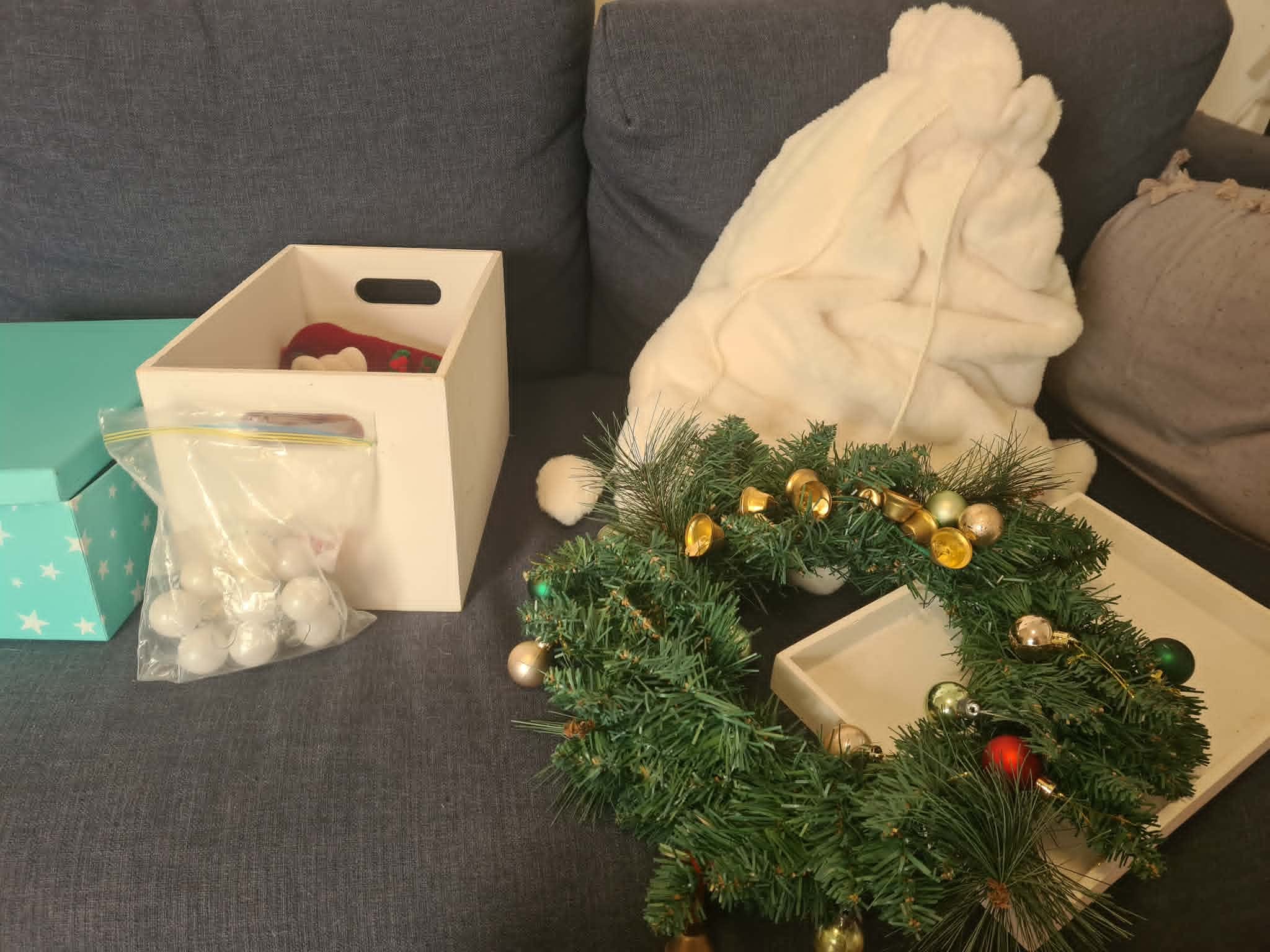
This may partly be my own personal (very structured) nature, and desire to have organisation in my life; it may partly be a response to living in a very small townhouse with my husband, toddler and two cats, and a normal response to having very limited space. But either way, knowing where things ‘go’ means that when I go to tidy a room, I can start by resetting back to the base standard of where things should be. Then I can deal with the things that need to be ‘deleted’ or edited out – things that can be thrown out or that belong in other rooms.
Having this framework in mind also helps with my writing. It means I am aiming for the words on the page to be tidy in a way that makes reading them more accessible. It means tucking away links to other ideas or containing a different train of thought in a way that does not clutter the page and text.
I don’t know why, but the two things give me a similar sense of satisfaction as well. To combine two baskets of laundry into neat piles ready to go to their homes in various cupboards gives me the same feeling as figuring out how to split an unwieldy sentence with too many ideas into two separate ones. Both are acts of creation as well as destruction – acts of shaping and crafting the materials you have into an ideal form.
The difference of course is that I often ‘edit’ the same room over and over again: the daily routines of putting things away once we are done, sweeping the floors, doing the dishes, starting the next load of laundry. Mostly, a piece of writing can only be edited so many times. Even the trickiest topic with a tight word count and high standards will eventually need to be labelled as ‘done.’ But there’s no submission date on a clean kitchen, or a tidy shelf of books. It’s an ongoing process. But maybe there’s something to learn from that as well when it comes to writing.
Perhaps, I should see my writing more as a room constantly evolving and being tidied and re-tidied and cleaned and organised. The things I publish here on substack are not always at their most polished, final state – because I could polish and polish forever and never call it done.
With this approach, a final piece of writing is less a final product set in stone, and more like a moment in time snapshot – like taking a photo of my living room in a tidy state and sending it off, not expecting the room to stay the same, but at least having captured this moment of organised, tidy calm.
As well as writing the Searching for Grace substack, Beccy is a copywriter and editor at Rebecca Sharley Writes, and the author of God’s Family Now: A New Look at Kids’ Ministry.
Oh I like this! Thanks for sharing.